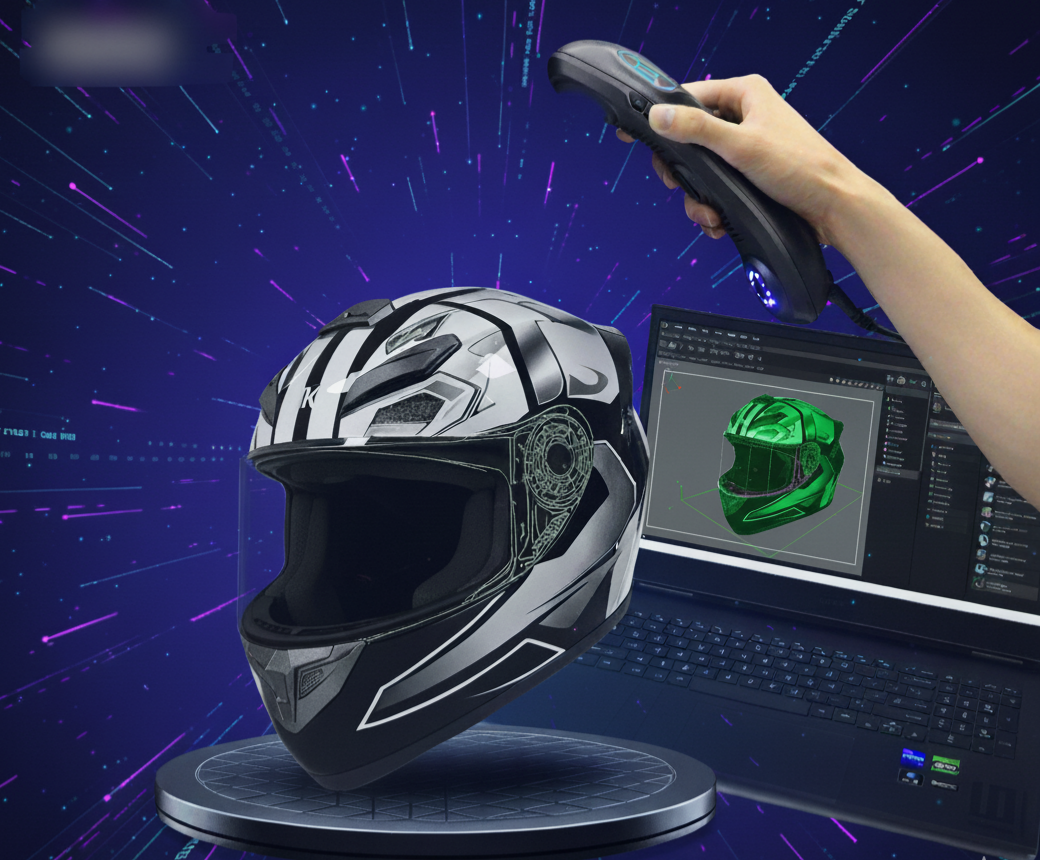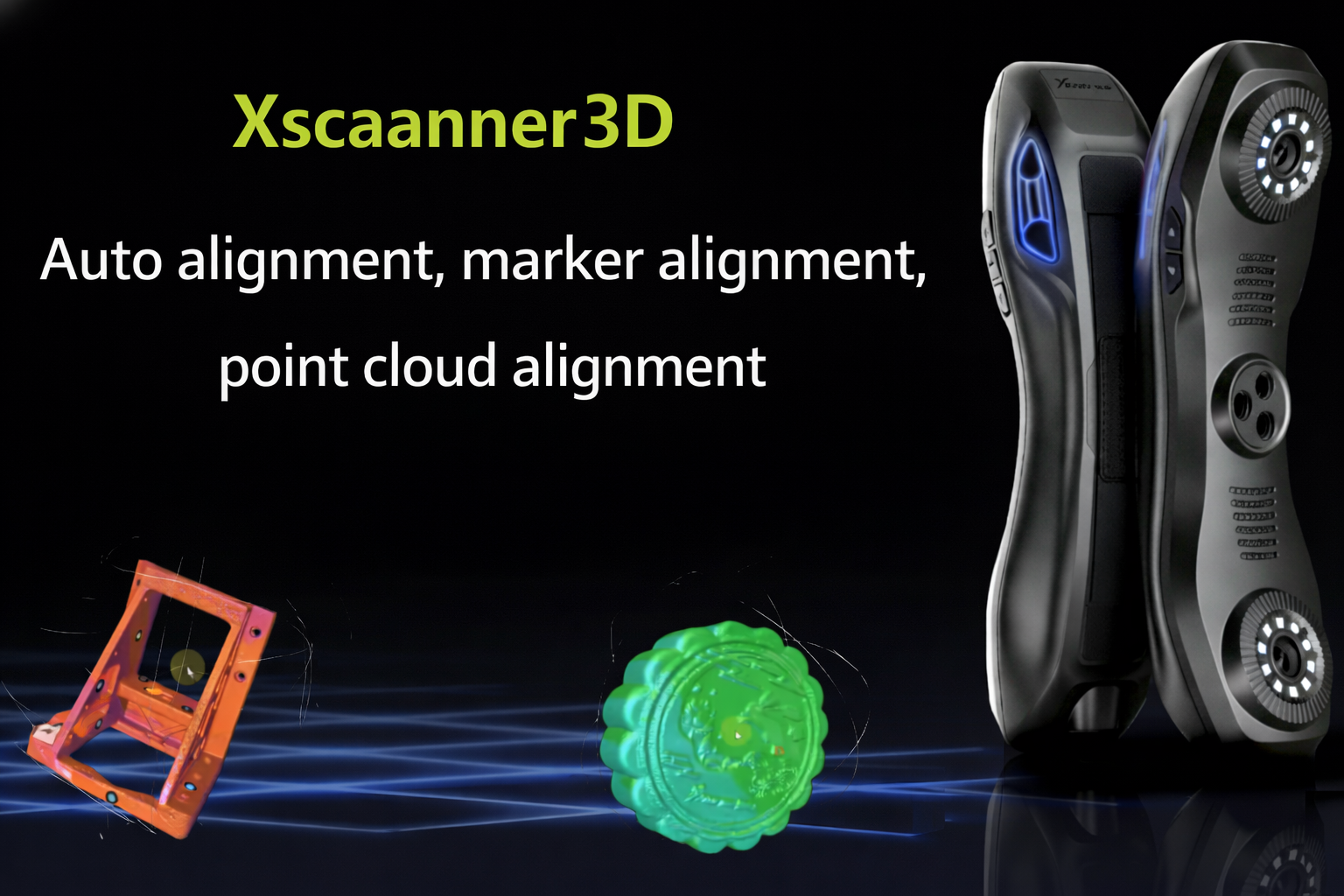
In 3D scan post-processing, automatic stitching, marker stitching, and point cloud stitching are three common 3D stitching modes, each with its own applicable scenarios, advantages, and disadvantages. Choosing the appropriate stitching mode requires considering factors such as the object’s features, accuracy requirements, and processing efficiency.
Automatic Stitching
• Principle: The scanning software automatically identifies and matches features such as edges, grooves, textures, and curvature changes on the object surface to achieve automatic alignment.
• Advantages: No external auxiliary markers are required, the operation is simple, and it is suitable for objects with rich surface textures or obvious geometric features.
• Disadvantages: If the object has too few overlapping areas, stitching may fail.
• Applicable Scenarios: Suitable for small- and medium-sized objects with rich surface features, such as sculptures with complex textures or electronic product housings.
Marker Stitching
• Principle: By attaching markers to the object surface, the software stitches scan data from different angles into a unified coordinate system based on the coordinates of the markers.
• Advantages: High accuracy, suitable for high-precision measurement projects, objects lacking surface features, or large objects.
• Disadvantages: Markers need to be attached to the object surface, which may cause slight damage to the object, and the placement of markers requires a certain amount of time and skill.
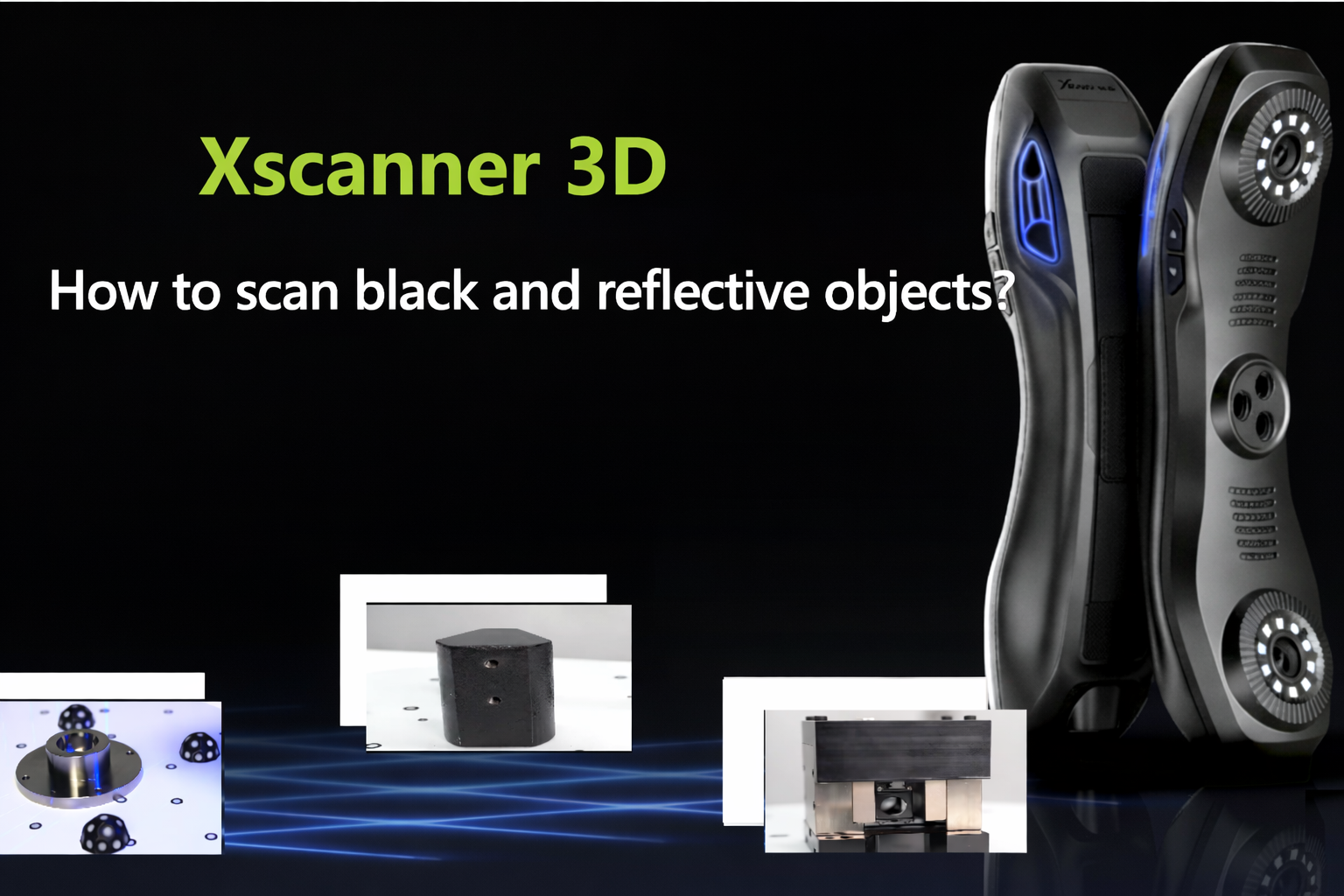
• Applicable Scenarios: Suitable for objects that require high precision, are relatively small in size, have complex details, or lack texture and geometric features, such as industrial parts made of black or reflective materials.
Point Cloud Stitching
• Principle: Stitching is carried out based on feature matching of point cloud data and the Iterative Closest Point (ICP) algorithm.
• Advantages: Suitable for various types of point cloud data, especially when the object surface features are not obvious.
• Disadvantages: Processing takes longer and may require higher computing resources.
• Applicable Scenarios: Suitable for stitching large scenes or complex objects, such as building interiors or car bodies.
Selection Suggestions
• If the object surface has rich features and the accuracy requirement is not high, choose automatic stitching.
• If high accuracy is required or the object surface features are not obvious, choose marker stitching.
• If processing large scenes or complex objects and sufficient computing resources are available, choose point cloud stitching.
• In practical applications, it may be necessary to flexibly choose the stitching mode according to the specific situation, and sometimes multiple methods can also be combined to achieve better results.